October 12, 2026 · 6 min · companion · product · content
.mdBuild AI Character Video Keepsakes: Turn One Great Scene Into a Takeaway
Build AI character video keepsakes from player-approved moments, with editable prompts, clear costs, private previews and a small paid-demand test.
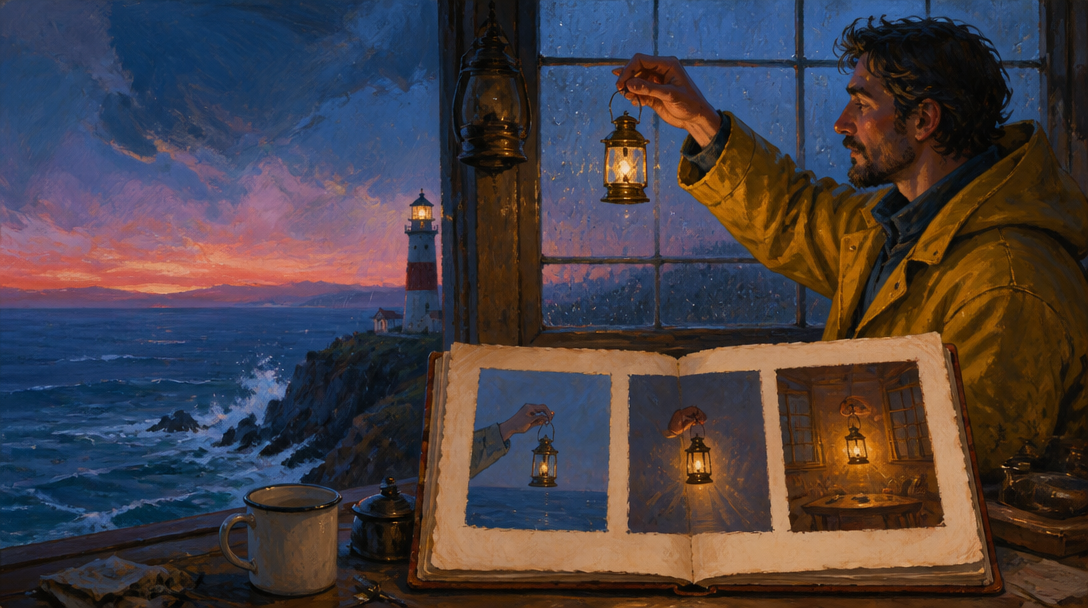
Build AI character video keepsakes by letting players choose one meaningful story moment, approve its still image and motion prompt, then generate a short clip they can keep or share. The appeal is a souvenir of something they helped make: the lighthouse relit, the reunion completed, the first expedition home. Sell the takeaway, not another endless feed. Start with one original milestone scene and find out whether anyone wants to own it.
The timely opening: a scene can become a souvenir
Nomi's V3 video guide, published September 30, 2026 and checked October 12, describes image-to-video generation with 5-, 10- and 15-second choices, SD and HD modes, and an editable prompt enhancer. That is a concrete consumer feature to learn from, not evidence of your future sales. The opportunity worth testing now is narrower than building another companion platform: help someone preserve the moment they already care about.
This is part of The 2027 AI Character Business Playbook. Unlike our live interactive romance recipe, this proposal begins after play. The conversation is finished; the souvenir renders asynchronously. Nomi's guide documents its consumer experience, not an image-to-video API you can assume is available to your app.
A worked example: the night the lighthouse came back
Imagine an original cozy adventure with Mara, an adult lighthouse keeper. The player has helped her restore the beacon before the island's homecoming celebration. Before the keepsake feature, the ending is a satisfying exchange followed by a saved text card. Afterward, an optional Make a keepsake button lets the player carry away that particular victory. This is a proposed design, not tested gameplay.
Offer three moments: the lamp catching, Mara's relieved smile, or the first ship answering offshore. The player picks the lamp and approves a still showing Mara beside the window. They can change the caption to Our first light. Their face is not needed. Use an original fictional character and artwork you have rights to process; do not solicit real-person face uploads.
Mara lifts the small lantern from the table to chest height. Warm light spreads across her coat as she smiles toward the window. The camera slowly pushes closer and settles on the glowing lantern.
That is an original, editable motion prompt, not a promised result. Nomi's guide recommends beginning from the reference image, describing actions in sequence and using positive camera instructions. Start by testing a five-second take if your chosen provider supports it. The buyer sees the duration, price and retry terms before confirming. A status card survives closing the tab; the finished clip opens in a private preview with Keep, Retry and Share as separate choices.
Build the smallest complete keepsake flow
- Define the payoff first. Offer keepsakes only at an authored milestone, with a dismiss button and an unchanged story ending. Buying a clip must not buy the character's affection or unlock an apology.
- Approve the material. Let the player select the moment, inspect the still and edit the motion prompt and caption. Send only those approved inputs to generation, not a private conversation transcript.
- Confirm the purchase. Show a server-calculated quote for the selected settings, what a failed generation costs, and whether retries cost extra. Reconfirm a changed quote; never silently spend credits after a price change.
- Run one durable job. Authorize ownership on the server, bind the accepted quote to the approved input version, and use a retry-safe purchase identifier. Reopening the page must recover the same job, not charge again. Show queued, generating, ready or failed without inventing an arrival time.
- Deliver privately. Check job ownership on preview and download. A retry is a new, explicitly priced attempt. Sharing requires a separate confirmation of the exact clip and caption; never attach chat history or publish automatically. Explain that downloaded copies cannot be recalled.
Realtime Avatar can supply the live character conversation leading to the milestone. It is not the image-to-video keepsake renderer and does not provide a Nomi integration here. Your application owns the souvenir workflow; a separately selected generation service supplies the clip. Confirm its supported API, commercial terms and content rules before implementation.
Test buyer intent before building a gallery
A one-off purchase or a clearly priced credit spend is an untested business hypothesis, not a proven revenue model. A proposed first experiment: recruit 20 opt-in adult cozy-fiction players, let each finish the same short milestone, and show an honest priced offer. Keep the ordinary ending available without payment. Record offer views, purchase attempts, completed payments, accepted clips, retries and refunds without collecting conversation content.
Proposed continue gate: at least eight choose a moment and four purchase, buyers accept their delivered clips, and total contribution remains positive. Interview everyone who rejects a result. If nobody buys, stop adding gallery features and revisit the moment, quality or price. Pause immediately for unauthorized charges or sharing. These are chosen learning gates, not benchmarks; twenty participants cannot establish stable conversion or retention.
For distribution, make one labeled fictional demo: the approved still beside the finished lantern clip, followed by an invitation to play that same scene. Share it only where promotion is permitted. Attribute visitors and purchases to that placement. Ask whether people want their own scene, rather than treating views as demand. Never use a customer's private conversation as advertising.
Budget for the takes nobody keeps
Calculate cohort contribution as receipts after refunds and taxes, minus all still and video attempts, allocated live-call costs, storage and delivery, payment fees, moderation, support and acquisition. Divide total delivery cost by accepted keepsakes to expose rejected-take costs; if none are accepted, report that rather than a unit cost. Count each base-plan allowance once. Use your chosen supplier's current quote, not an invented rate.
Set a test spending ceiling and retry allowance before recruiting. Face and clothing consistency, natural movement and generation time remain uncertain. Nomi itself discusses appearance drift and slow-motion results; HD is not a consistency guarantee. Keep the approved still available if the clip disappoints, and honor the failure policy shown before purchase.
Frequently asked questions
Is this a recording of the live call?
No. It is a separately generated interpretation of an approved fictional moment, not a recording or evidence that the depicted action happened. Label it accordingly.
Can Realtime Avatar generate the keepsake?
Not through the workflow described here. RTA supplies live character interaction; choose and verify a separate image-to-video service for the souvenir.
Will the character look identical throughout?
Do not promise that. Inspect results for drift and unwanted motion. Let the buyer preview, reject or explicitly request a priced retry under the disclosed policy.
What should I build first?
One original milestone, one approved still and one bounded generation flow. The public Next.js starter covers the live layer: calls consume credits and have a 60-second cap. Its authorization is local-only, not production-ready; add real authentication, balance checks, rate limits and persisted session ownership before hosting. This article does not claim a tested implementation.